Aosta · Go deeper
Cost & housing
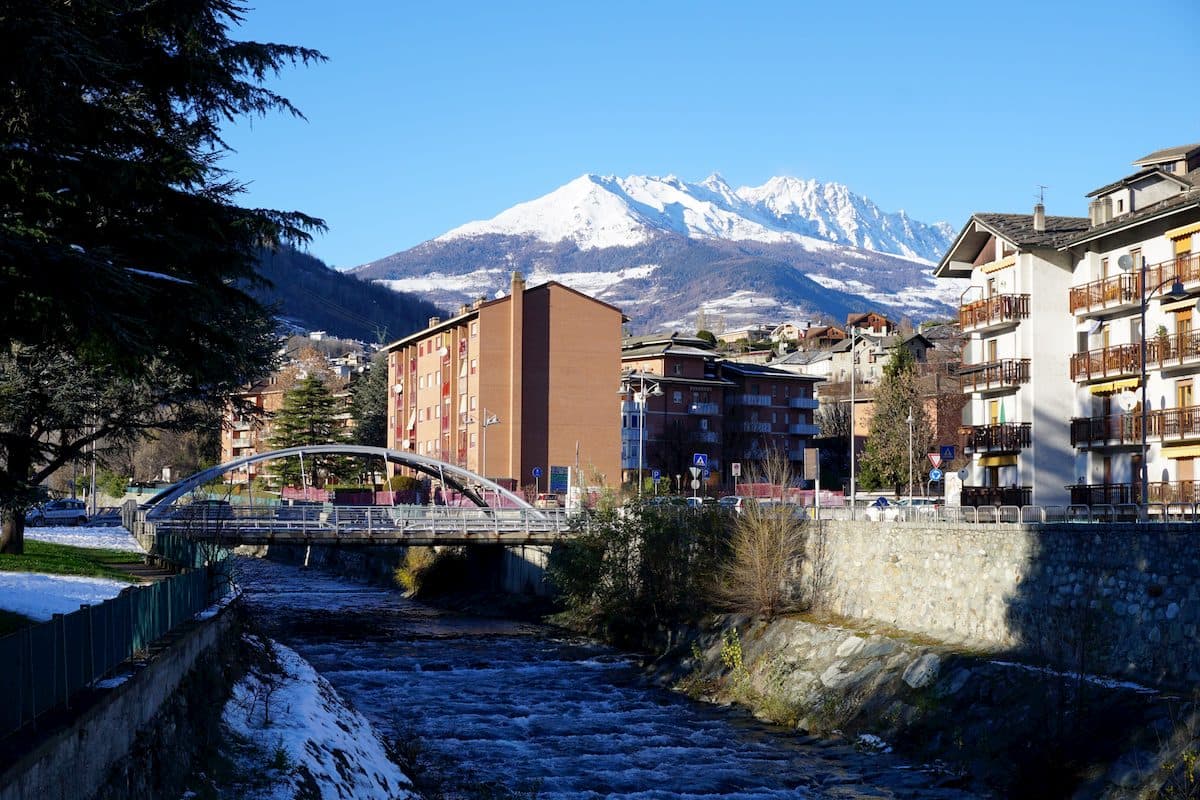
A mountain capital where renting is mid-priced and buying is slowly softening: scenery like this rarely costs so little.
Renting
These are for a decent, functional apartment with a real kitchen and a lift. Cheaper exists if you compromise on condition, floor, or distance from the centre. Aosta’s old town is compact, so “outside the centre” is never far. In Italian listings a bilocale is a one-bedroom and a trilocale a two-bedroom: rooms, not bedrooms.
Buying
A gently declining market is unusual for a city this scenic. It makes Aosta unusually buyer-friendly right now. Buy prices are never scored; they live here as reference only.
Source: Immobiliare: Aosta sale prices ›
Other monthly costs
Utilities track the national market, so that range holds across Italy. The alpine caveat: Aosta sits at 583 m with real winters, and an older, less-insulated building can push heating bills well above the upper end of this range from December through March. Ask about insulation and heating system before you sign anything.
Arriva Valle d’Aosta / SVAP. Check the current tariff directly for confirmed pass pricing
Our take
You’re not paying a premium for the Alps here. Rents sit mid-range, prices per square metre are lower than most Italian cities and actually easing, and the urban centre is compact enough to live without a car. The real costs are seasonal, not monthly: heating in an older building, winter tyre sets if you drive into the valley, and the car itself once you want to reach the resort towns or the mountain passes. Budget for those properly and the base cost of living in Aosta is reasonable for what surrounds it.
The one thing nobody else tells you: Valle d’Aosta is a small autonomous region that subsidises its own transport network, and residents have been offered a flat monthly pass valid on the entire regional bus system. That’s not just Aosta city buses: it covers the valley routes out to the resort gateways and smaller communes. For a mountain region where a car feels mandatory, a single low regional fare that covers the whole valley is the money-saver newcomers miss. The pass has been reported at around €20 a month; verify the current tariff with Arriva Valle d’Aosta or SVAP before you build it into a budget, but the principle holds: one autonomous region, one subsidised network, one fare for the lot.
Prices move. Check Idealista and Immobiliare for current listings.