Montepulciano · Go deeper
Where to live
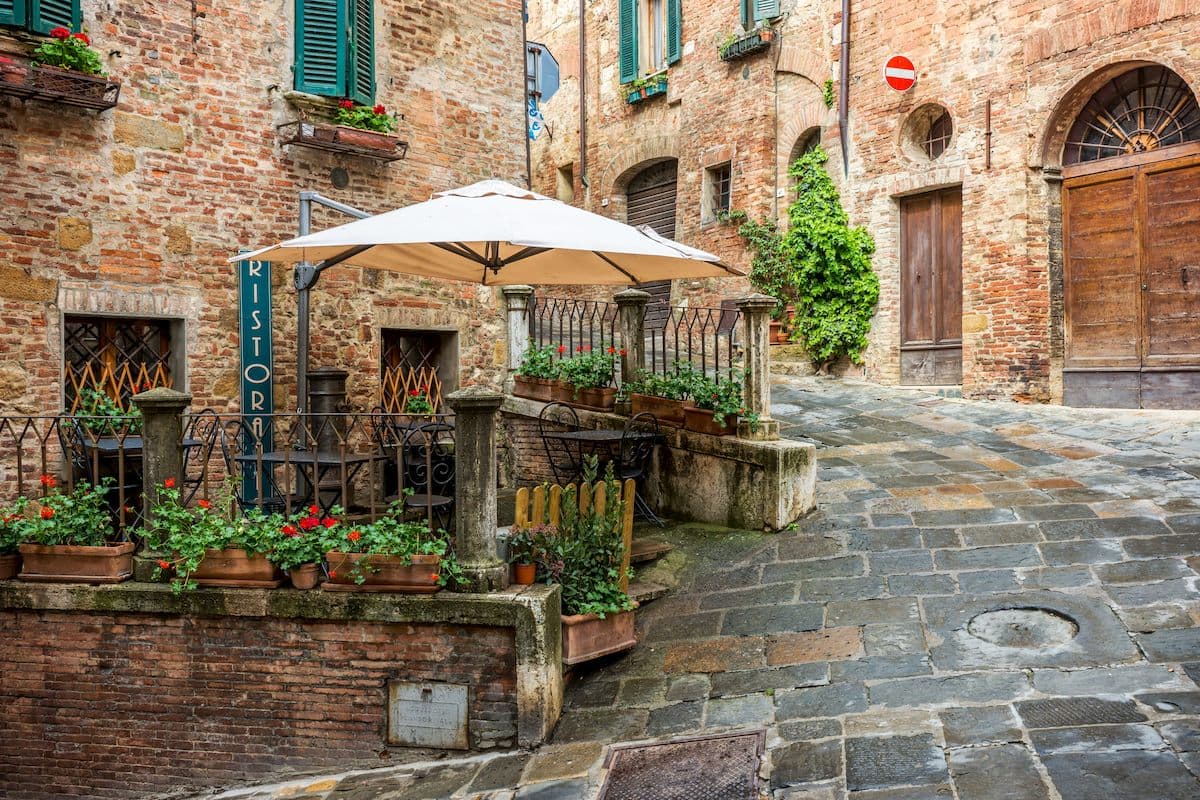
Montepulciano climbs a single ridge, its main street rising from the gate to the Piazza Grande at the top, and around it, down in the valley, lie the hamlets of its wine country. So the choice here is simple: live up in the Renaissance town itself, or out among the vineyards below. Up top you get the street life; down below you get the view back up at it.
The walled town
Montepulciano (inside the walls)
most sought-afterThe town itself: a steep, single climb of honey-stone Renaissance palaces up the Corso to the Piazza Grande at the summit, with cellars of Vino Nobile tucked beneath the mansions and long views over two valleys. It's endlessly walkable, so long as you don't mind that every errand is uphill one way, the most sought-after place to live, and, for a rural town, the dearest, though apartments are scarce enough that availability matters more than price.
Best for: those who want to live inside a Renaissance hill town, everything on foot and uphill
Learn more about the historic heart
Montepulciano is often called the Pearl of the Cinquecento, the pearl of the 1500s, and the name is earned. In the Renaissance, wealthy Poliziano families rebuilt their hill town in high style, lining the climbing Corso with honey-coloured palaces and crowning it with the Piazza Grande, where the town hall deliberately echoes Florence’s Palazzo Vecchio. Just below the walls stands the finest thing of all: the church of San Biagio, a perfectly proportioned domed temple begun in 1518 by Antonio da Sangallo the Elder, one of the purest works of Renaissance architecture in Tuscany, standing alone in a green meadow.
And the wine is nearly as old as the beauty. Vino Nobile di Montepulciano was already famous in 1549, when a papal taster pronounced it ‘a most perfect wine, a wine for lords’, the noble wine that still gives the town its fame and fills the cellars carved beneath its Renaissance streets. To live in Montepulciano is to live inside a sixteenth-century vision of the good life, with the vineyards that inspired it rolling away on every side.
The wine-country hamlets
Sant'Albino, Gracciano & the valley hamlets
rural, valueThe frazioni spread through the valley below the town, Gracciano and Abbadia along the main road, Sant'Albino known for its thermal springs, flatter, more everyday, and noticeably cheaper than the walled town, with more space and easier parking. These are working, lived-in villages where a lot of working Montepulciano is based, close to the vineyards and a short drive up to the centre. They're plainer than the postcard town, and rural life needs a car.
Best for: those wanting rural value, space, and everyday village life near the vineyards
The vineyards & country estates
rural, idyllicBeyond the villages, the classic Tuscan dream: farmhouses and estates scattered through the Vino Nobile vineyards and the rolling hills toward the Val d'Orcia. Beautiful, private, and deeply rural. This is the countryside people fall in love with. Total car-dependence and isolation come with it, and it's a buying-and-restoring world more than a rental one; the numbers here are a different, much bigger conversation.
Best for: those chasing the country-estate dream and ready for its realities and costs
Rough rents are indicative and move with the market, and the local market is small. Check current listings on Idealista ›