Syracuse · Go deeper
Cost & housing
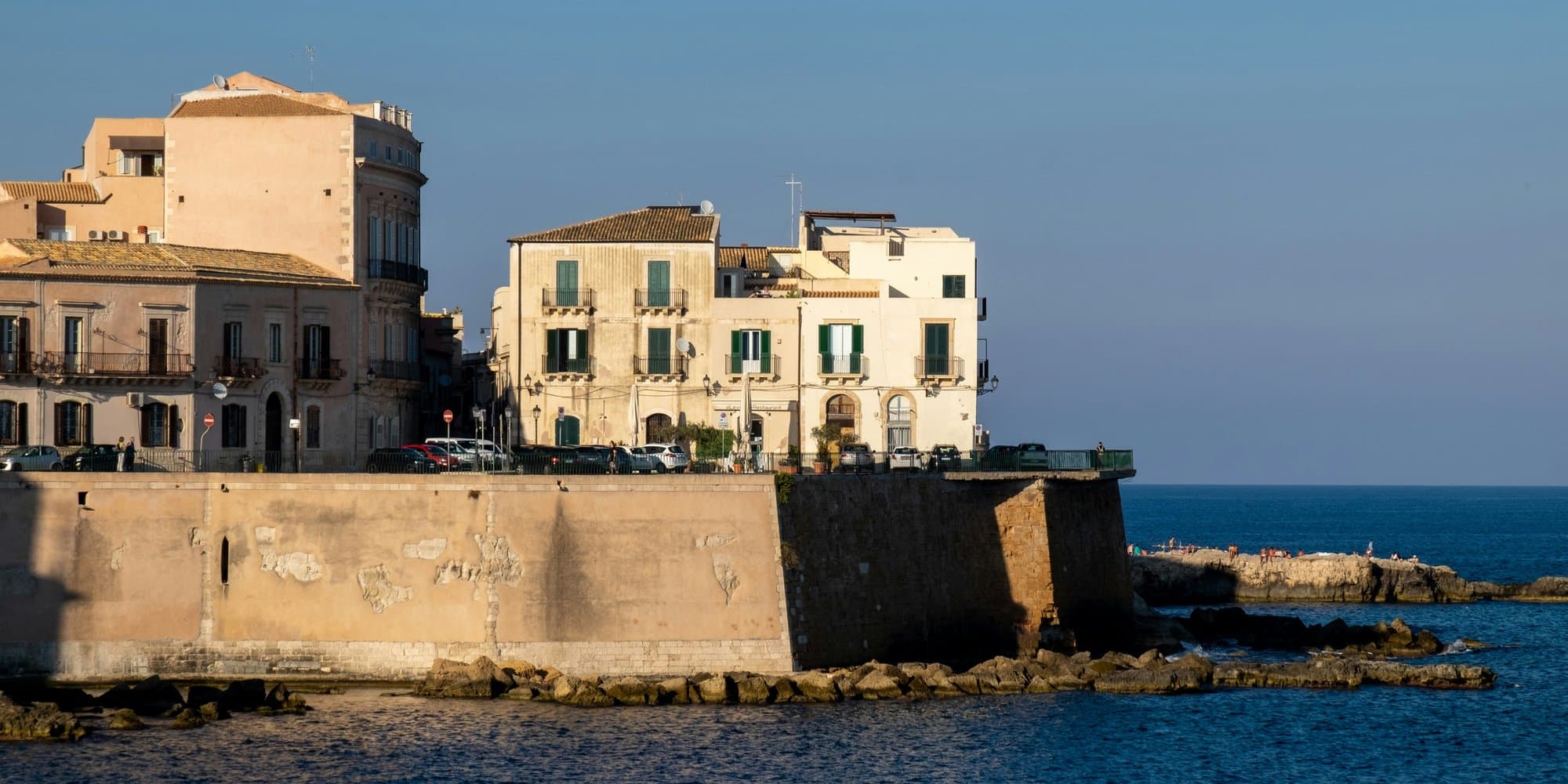
Syracuse’s money story is a tale of two cities: Ortigia, the island old town you fall for, runs to Sicily’s highest rents, while the mainland just across the bridge stays cheap.
Renting
These reflect a decent, functional apartment with a real kitchen and a lift. On Ortigia you pay for the setting and the sea; cheaper exists the moment you cross to the mainland. In Italian listings a bilocale is a one-bedroom and a trilocale a two-bedroom, rooms, not bedrooms.
Buying
Ortigia holds and rises because demand for the island never fades; the mainland is soft and affordable. Buying the postcard costs almost triple buying five minutes away.
Other monthly costs
Utilities are a national market in Italy, so that range holds roughly anywhere. Syracuse’s mild coastal climate keeps heating low, with summer air-conditioning the main add. Note: Syracuse’s city buses are run by SAIS Autolinee, not AST. AST is the intercity and regional operator.
Source: SAIS Autolinee ›
Our take
The numbers tell Syracuse’s story, which is a choice more than a price. Ortigia, the little island of golden stone and sea-lit alleys, is where nearly everyone wants to live, and the market knows it: rents run to the highest in Sicily and buying costs almost triple the mainland. Cross the bridge, and the same money buys far more space in a plainer, perfectly livable town. Neither is wrong. You’re deciding how much the postcard is worth to you, and Syracuse makes that trade unusually stark.
What’s rare here is that even the premium is modest by mainland-Italian standards. Ortigia at its dearest is still a fraction of Florence or Milan, and the mainland is among the cheapest coastal living in the country. So Syracuse offers a soft version of a hard choice: you can have the island dream for real money-but-not-crazy-money, or the quiet-value life a five-minute walk away. For the person who wants beauty without the big-city cost, both answers are good ones, which is the whole appeal.
The one thing nobody else tells you: Ortigia’s most beautiful apartments are also its trickiest to own: many sit in centuries-old buildings under heritage protection, which limits what you can change and can slow renovations to a crawl of permits. But that same protection is why the island still looks the way it does. Nothing gets bulldozed. If you’re buying on Ortigia, budget extra time and money for restoration done to the rules, and get a local architect who’s navigated the heritage office before; the reward is owning a piece of one of the loveliest old towns in the Mediterranean.
Prices move. Check Idealista and Immobiliare.