Trento · Go deeper
Where to live
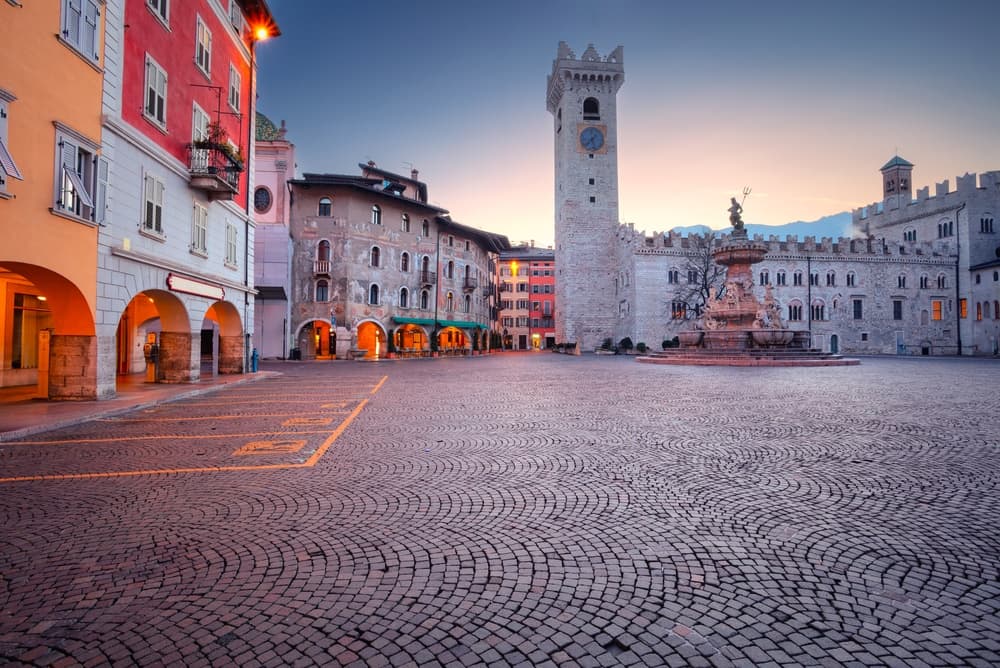
Trento really divides along one line: the walkable historic center down on the valley floor, the residential hillsides climbing up around it, and the flatter modern districts and valley suburbs spreading out from the middle. Where you land comes down to whether you want to step out your door into the old city, wake up to a view over it, or trade a little atmosphere for space and quiet.
The heart — the historic center
Centro Storico (the old town)
most desirableThis is the Trento people picture: a compact, elegant core of frescoed facades, arcaded streets, and quiet squares, anchored by the Piazza Duomo with its cathedral and Neptune fountain, and watched over by the Castello del Buonconsiglio at its edge. Living here means everything is on foot, the market, the cafes, the passeggiata, the museums, and the city’s whole daily life is literally outside your door. The trade is the usual one for a beautiful center: the best apartments are scarce and sought-after, some buildings are old inside as well as out, and you’re in a limited-traffic zone, so you park at the edge and walk in. It’s pure Trento, atmosphere and convenience in one, for the person who wants to be in the middle of it all.
Best for: those who want to live in the beautiful heart of the city and do everything on foot
Learn more
Trento’s center carries a deeper history than its size suggests, this was the seat of the Council of Trent in the sixteenth century, and the Cattedrale di San Vigilio and the frescoed palazzi around the Piazza Duomo still show that Renaissance weight. The Castello del Buonconsiglio, once the residence of the prince-bishops who ruled the city for centuries, holds some of the finest medieval frescoes in the Alps. Step off the main squares and the arcades give way to quiet residential lanes, the real, lived-in city behind the monuments.
Up the slopes — the hillside neighborhoods
Povo, Villazzano & the eastern hills
views & greeneryClimbing the slopes east of the center sit leafy residential neighborhoods like Povo and Villazzano, greener, quieter, and prized for their views back over the city and the valley. Povo is also home to part of the University of Trento and research institutes, so it mixes settled residential streets with a younger academic presence. You get calm, air, and space up here, with the trade that you’re above the city rather than in it, so you’ll lean on the bus or a car to drop down into the center. It suits someone who wants a house and a view over an apartment and a piazza.
Best for: families and view-lovers who want green, quiet, and a bit of space, and don’t mind commuting down into town
Sardagna & the western terrace
quiet & elevatedPerched on the slopes across the valley, reached by a little cable car from the center as well as by road, Sardagna is a small, elevated village-neighborhood with sweeping views over Trento. It’s peaceful and distinctly rural in feel despite being minutes from the city. What you get, and give up, is quiet and separation, this is a small community up the mountain, not a city district, so you build your days around the cable car or the drive.
Best for: those who want a calm, elevated perch with a view and don’t need the city’s buzz at their feet
The valley floor — modern districts and suburbs
San Martino, Le Albere & the modern center
convenient & centralSpreading out from the historic core on the flat valley floor are the newer, more workaday districts, among them the redeveloped Le Albere quarter, a modern riverside development designed by Renzo Piano that’s home to the MUSE science museum. These areas give you level ground, easier parking, contemporary apartments, and an easy walk or short bus ride into the center. The trade is that you swap some of the old town’s charm for practicality and modern convenience. It’s the sensible, comfortable side of living in Trento.
Best for: those who want modern, convenient, level-ground living within easy reach of the center
The valley suburbs (Gardolo, Mattarello & out)
space & valueFurther out along the valley, districts and villages like Gardolo to the north and Mattarello to the south are more residential and ordinary, where a lot of local families actually live. You get more space and a quieter, everyday rhythm here, further from the tourist center and closer to the practical stuff of daily life. The trade is that you’re out of the historic core, so you commute in for its pleasures and rely more on the bus or the car.
Best for: settlers who want everyday local life, more room, and an easy run into the center when they want it