Trieste · Go deeper
Where to live
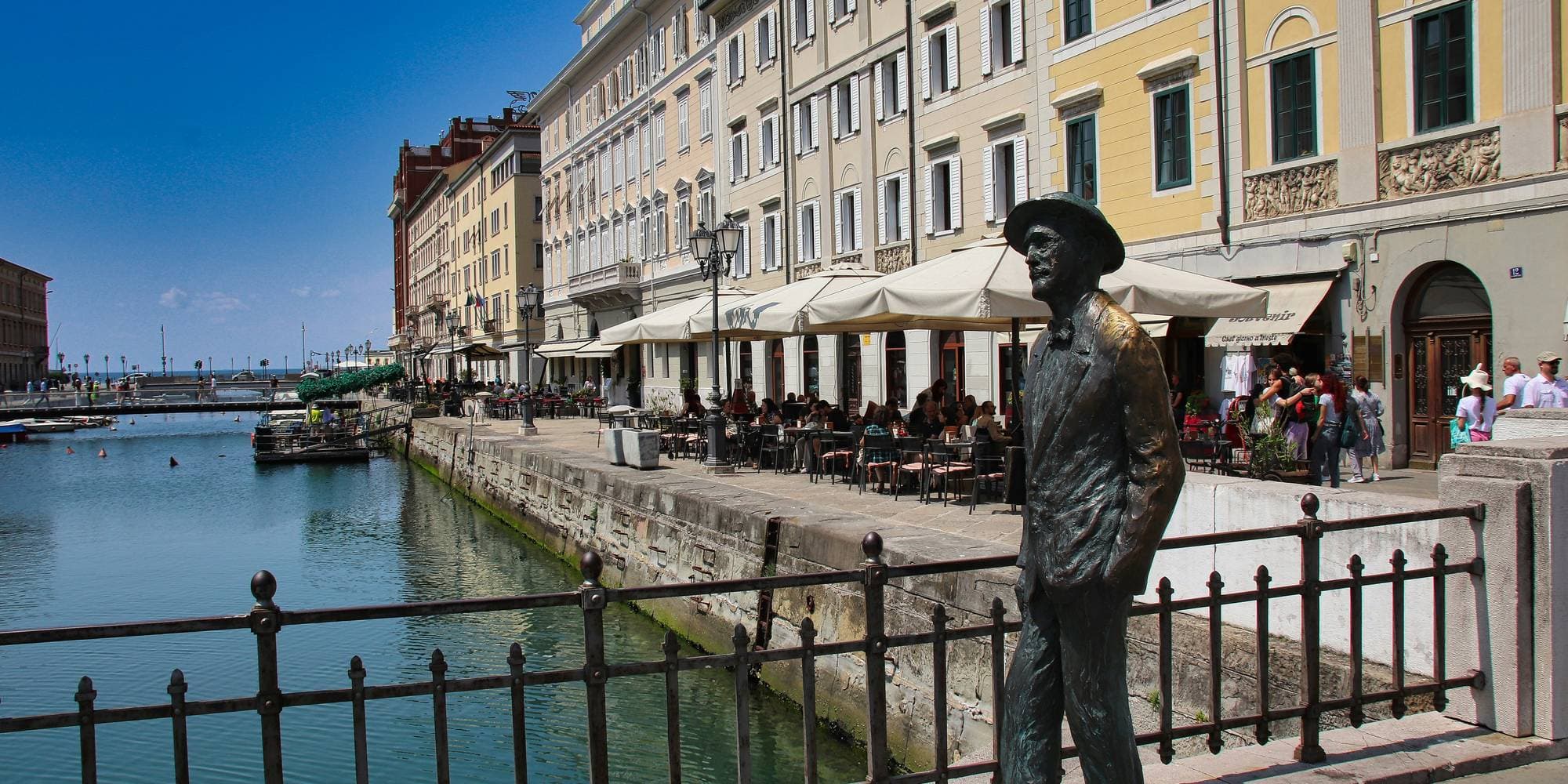
Trieste is a set of villages that happen to share a city. Ask someone which rione they’re from and they’ll tell you, at length. The centre is Habsburg and grand, the coast is where the city actually lives in summer, and the hills behind hold most of the quiet. So the rioni below are worth knowing by name.
The centre
Borgo Teresiano
premiumMaria Theresa’s grid, laid straight down to the water. Neoclassical palazzi, the Canal Grande running in from the sea with Sant’Antonio’s green dome at the end of it, the Caffè degli Specchi on Piazza Unità. Teatro Verdi is around the corner. Elegant, busy, and Central European in a way no other Italian address is. The trade: the traffic is constant, there’s almost no green, and these grand nineteenth-century buildings often have no lift.
Best for: people who want the city’s best face and don’t mind the noise
Città Vecchia
premiumThe old town climbing the hill behind Piazza Unità. Narrow lanes, twisting staircases, a Roman wall, medieval houses, artisan workshops and osterie tucked into the slope. Everything you love about it is the reason it’s hard work. The trade: steep, cobbled, and the flats are old.
Best for: people who want the atmosphere and can still take the stairs
The sea
Barcola
premiumFour kilometres up the coast, and where Trieste actually lives in summer. The pine wood, the long promenade, and the Topolini, concrete platforms the whole city swims off. The Barcolana starts here, the most crowded regatta in the Adriatic. The trade: you pay for it, and August is loud.
Best for: anyone whose reason for coming is the water
Gretta
midUp the hill behind Barcola, under the Faro della Vittoria, a sixty-eight-metre lighthouse on a sixty-metre hill, so the view is the point. Balconies over the gulf don’t sit on the market. The trade: the buses are a nuisance and the hill is a hill.
Best for: people who’d trade convenience for that view
The hills
San Vito
midResidential, green, quiet. Schools, parks, the sort of streets where the same faces walk the same dogs. Ten minutes down into town, and a world away from it. The trade: almost nothing open in the evening.
Best for: family calm, and anyone who’s done with nightlife
Roiano
midAt the foot of the Karst, and one of the few quarters that still feels like Trieste did a century ago. Four thousand people, a parish church, and the Scalinata dei Giganti, two hundred steps straight up. Nothing curated about it. The trade: it isn’t pretty, exactly.
Best for: people who want the real thing over the nice version
Opicina
midUp on the plateau, 300 metres above the city. Villas, gardens, clean air, and the whole gulf laid out below you. People who move here stay. The trade: it’s a commute, and the tram that should make it easy has been broken most of a decade.
Best for: space, air, and not minding the drive
Real and cheap
San Giacomo
lowerThe city’s most alive quarter, and its loudest. Markets, small shops, several languages on one street, everything open. Period buildings, mostly without lifts. It’s the cheapest place you can still walk to the centre from. The trade: little green, and the traffic runs right through it.
Best for: people who want a neighbourhood, not a view
One thing worth knowing before you fall in love with a fourth-floor flat: Trieste’s grand old buildings often have no lift. Ask. Check current listings on Idealista ›