Catania · Go deeper
Cost & housing
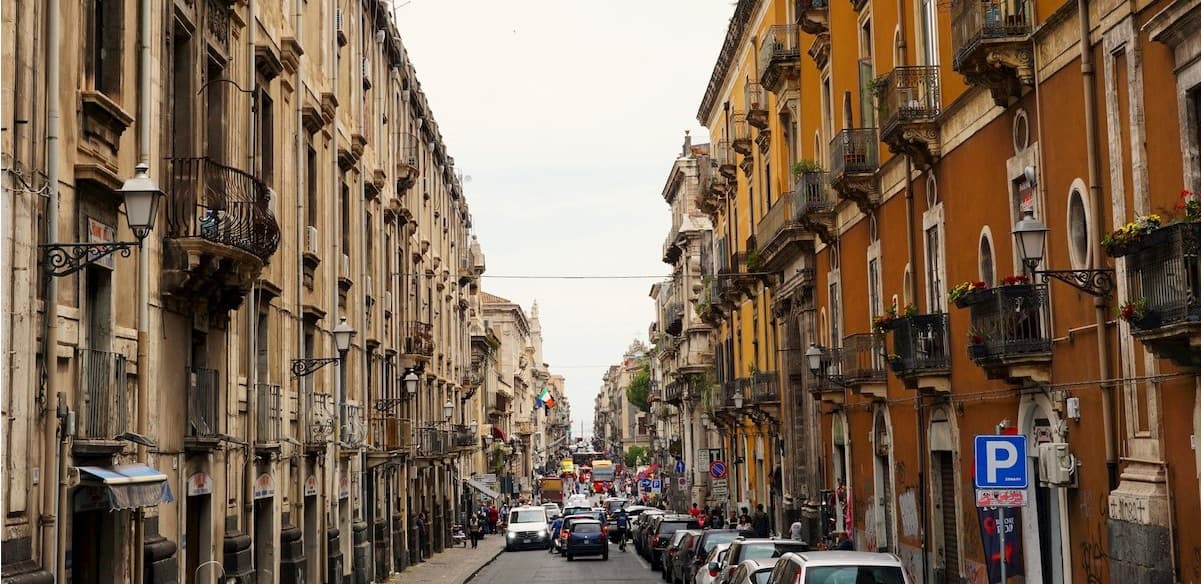
Catania’s deal is simple: a real city at small-town prices, cheaper to rent and to buy than almost any big city in Italy.
Renting
These reflect a decent, functional apartment with a real kitchen and a lift. Cheaper exists if you compromise on condition, or take the black dust and noise of the busiest streets. In Italian listings a bilocale is a one-bedroom and a trilocale a two-bedroom, rooms, not bedrooms.
Buying
Across the city, prices run roughly €765–1,800 / m². The trend is gently rising, about 0.6% over the year, from a low base. Catania is one of the cheapest big cities in Italy to buy in, cheaper even than Palermo.
Other monthly costs
Utilities are a national market in Italy, so that range holds roughly anywhere. Catania’s mild winters keep heating low, but summer air-conditioning under the Sicilian sun adds up.
Source: AMTS Catania ›
Our take
The numbers say what the city already tells you: Catania is where your money buys a full life for very little. A couple can rent a proper central apartment for what a single room costs up north, and buying a faded-grand flat in the old town is within reach on a modest budget, cheaper here than in Palermo, and a fraction of the mainland. The catch is the same as the charm: the cheap places are cheap because they’re on a loud street, or need work, or wear the black volcanic dust the whole city wears. Budget for renovation if you buy, and see everything in daylight first.
What you’re really buying in Catania is a working city, not a resort. It runs year-round, full of students and market traders and a young tech crowd, and it never empties out when the tourists leave, which means real neighbourhoods, real prices, and a real economy rather than a seasonal one. For the person who wants to actually live somewhere, not just holiday in it, that’s the whole appeal, and it comes at a price that makes very little sense until you understand you’re buying the unpolished version on purpose.
The one thing nobody else tells you: Catania’s real estate is cheap partly because of Etna, buyers price in the volcano’s ash and the small but real seismic risk. But the same volcano is why the land is so fertile and the region so alive, and modern building standards handle the risk far better than the old stock suggests. If you buy, have an engineer check the building’s construction and any anti-seismic work; a sound apartment here is one of the last cheap ways to own a piece of a major Italian city, volcano view included.
Prices move. Check Idealista and Immobiliare.