Sarzana · Go deeper
Where to live
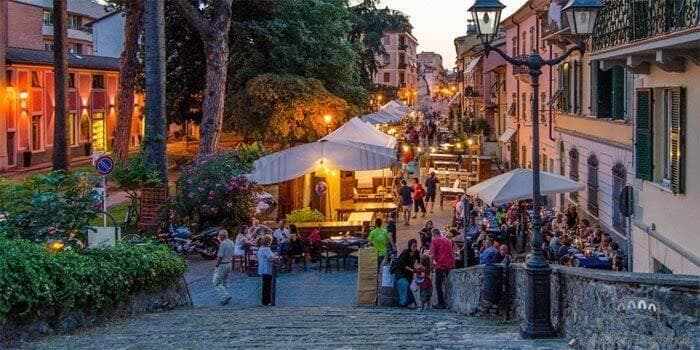
In a town this size, “which neighborhood” really means one thing: how close to the old walls, how close to the sea, or how far up into the affordable hills.
The historic heart
Centro Storico (inside the walls)
Most character · Mid-dearThe walled medieval core is where Sarzana's character lives: the Cittadella fortress rebuilt by Lorenzo de' Medici, the Gothic marble cathedral, Piazza Matteotti, and the arcaded streets that fill with antique dealers on market weekends. You live above shops and cafes, reach everything on foot, and the fortress is at the end of the street. It's the liveliest and most sought-after part of town, so rents and prices sit at the higher end, and market days bring a real crowd. The trade-off is cost, and on the busiest weekends, noise.
Best for: someone who wants to live inside the history, walkable and alive
Learn more about the historic heart
Sarzana has been a contested border town for most of its history. Pisa held it for centuries as a strategic gateway between Tuscany and Liguria; after Pisan power faded, Florence moved in and acquired it in 1468. Lorenzo de’ Medici rebuilt the Cittadella, the fortress you still see at the western edge of the centro, in 1488, giving it the form it holds today. Genoa eventually wrested control in 1572 and kept it until the Napoleonic reorganisation. The result is a town that carries Pisan, Florentine, and Genoese fingerprints all at once.
Above the town on the hill to the northeast stands the older Fortezza di Sarzanello, a 14th-century castle that predates the Medicean Cittadella and looks down over everything. The two fortresses together mark Sarzana’s role as a garrison and a tollgate: whoever held Sarzana controlled the road between the Po Valley, Tuscany, and the Ligurian sea. You can walk up to Sarzanello from the town in about thirty minutes.
The Cattedrale di Santa Maria Assunta was begun in the mid-14th century in the Gothic style. It contains a painted crucifix attributed to Maestro Guglielmo, dated to 1138, one of the oldest painted crosses in Italy, and the piece that draws art historians to a town most tourists bypass on the way to the Cinque Terre.
In August the centro hosts “La Soffitta nella Strada,” one of Italy’s best-known open-air antiques markets, when dealers fill the arcaded streets with furniture, prints, silver, and art for three weekends running. If you live in the centro, this is wonderful once and logistically meaningful thereafter, worth knowing before you sign a lease.
Toward the sea
Marinella
DearestSarzana's coastal edge, out toward the Magra rivermouth and the beach strip near Marinella di Sarzana. Newer, more spread-out, and the most expensive part of the comune. Prices here run well above the inland zones and have been rising faster than anywhere else. It's quieter and more car-dependent than the old town, without the historic character, but the sea is close and that's the whole point. You're paying a coast premium in a town that isn't technically on the coast.
Best for: someone who wants the beach within reach and will pay the premium for it
The affordable inland edges
Olmo, Santa Caterina & Falcinello
ValueThe inland and hillside quartieri away from the old core: residential, calmer, and where you find the most attainable prices in Sarzana. More space and greenery than the centre, a short hop from the old town by car or bike, with a real neighbourhood feel rather than tourist-weekend energy. You'll want a car for daily convenience, and the walk into the centro is longer than it looks on a map.
Best for: families and anyone who wants the most house for the money and doesn't mind driving in
Nave and the outlying frazioni
Lower · RuralThe scattered villages and hamlets around Sarzana, toward the countryside and the hills: cheapest of all, rural, real Ligurian village life with more space and quiet than the town itself can offer. The old farmhouses and case coloniche out here are what pull people looking for land and a slower pace. A car is essential, you're a drive from the shops, and the isolation that feels romantic in June can feel inconvenient on a wet November morning.
Best for: someone who wants quiet, land, and a village pace, and knows what they're signing up for
The core for history and walkability at a premium, Marinella for the beach at a price, the inland quartieri for value and space with a car, the frazioni for true rural quiet. Real figures live on the Cost & Housing page. For current listings, check Idealista ›