Tropea · Go deeper
Getting around
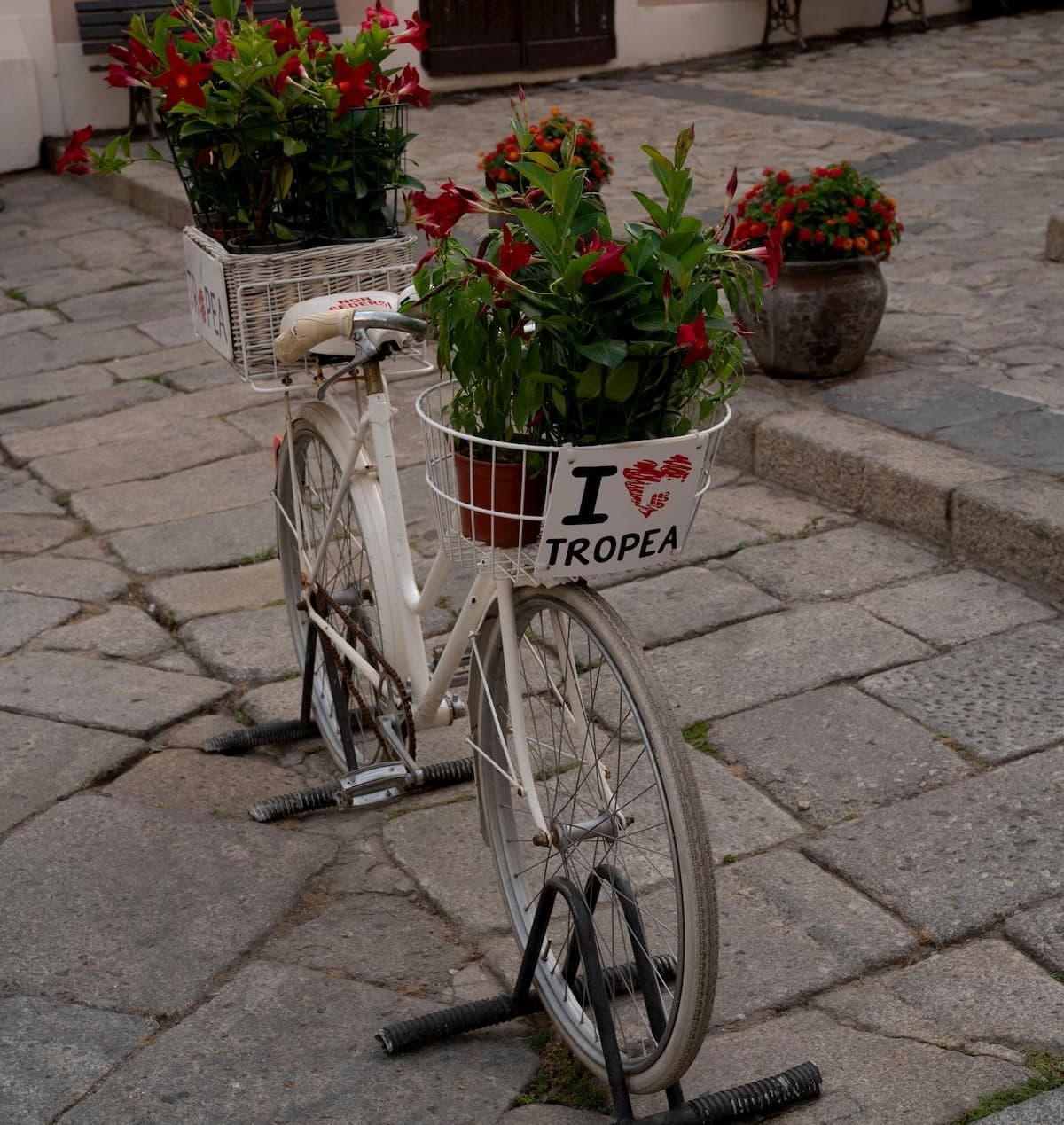
Tropea, boiled down: you’ll want a car, your airport is Lamezia Terme, and the town itself you do entirely on foot. The old town is a small tangle of pedestrian lanes where driving is pointless and parking in August is a genuine ordeal, so in town you walk. But the moment you want the beaches at Capo Vaticano, the next village, or a real supermarket, you’re back in the car, because this is the deep south and the buses are thin. The coastal train is a lovely, slow way to reach other towns up and down the shore, just don’t plan your daily life around it.
Getting there
By air, the long-haul leg
Arriving from far away, you’ll connect through a European hub. There’s no meaningful direct intercontinental service to this corner of Calabria. Fly the long leg into a major European gateway, then a short hop south.
Lamezia Terme (SACAL)
The airport you’ll actually use. About 60 km up the coast, roughly an hour by car. It’s Calabria’s main airport, with solid domestic links to Rome, Milan and the north, and a good spread of seasonal international routes in summer that thin out in winter. This is your gateway in and out. Routes and status on SACAL ›
By car
Coming from the north (Lamezia, or the Salerno–Reggio Calabria A2 autostrada), you exit toward Pizzo/Vibo Valentia and drop down to the coast on the SS522, the coastal road that strings Tropea’s beaches together. From the airport it’s about 50 minutes to an hour. A car is the thing that actually makes life here work.
By train
Tropea sits on the Tyrrhenian coastal line, so other towns along the shore are within easy reach (rough times below). It’s scenic and cheap, but regional and unhurried, a pleasure for a day out, not a substitute for a car.
Around the city
On foot
The centre is small and walkable, most daily life in town happens on foot, and the historic core is pedestrian anyway. In summer the lanes are packed; in winter they’re yours.
Regional buses (Ferrovie della Calabria)
The local and regional coach network covers the surrounding towns and villages, but service is limited and slow. The direct runs to some places go only a few times a week. Usable in a pinch, not something to depend on daily.
A note on driving
No ZTL or congestion charge to speak of. The issue is simply parking. In July and August the town overflows and a space near the centre is hard-won. Off-season it’s a non-issue. Most residents keep a car and park on the edge of the old town, or at their place outside it.
Intercity coaches (FlixBus / Itabus)
The cheap way to move between cities. FlixBus and Itabus run to the bigger Calabrian and mainland destinations. Slower than the train on some routes, cheaper on others; worth checking both. Routes and fares on FlixBus ›
Train connections — from Tropea station
Tropea sits on the Tyrrhenian coastal line, so the coast and the region’s hubs are a scenic (if slow) ride away. Rough fastest times:
Lamezia Terme
about 1h 30m
Vibo Valentia
about 40m
Pizzo
about 30m
Reggio Calabria
about 2h 30m
Cosenza
about 2h 30m (change)
Naples
about 4h+ (change)
Rough fastest times, check Trenitalia for live schedules.
One note
One real quirk to plan around: Tropea runs on two timetables. In summer the trains, buses and even extra seasonal services fill up and the town heaves; by deep winter the tourist trade sleeps, some connections thin out, and the place goes quiet. Whatever you’re told about getting here and around, ask which season it’s true for.