Tropea · Go deeper
Where to live
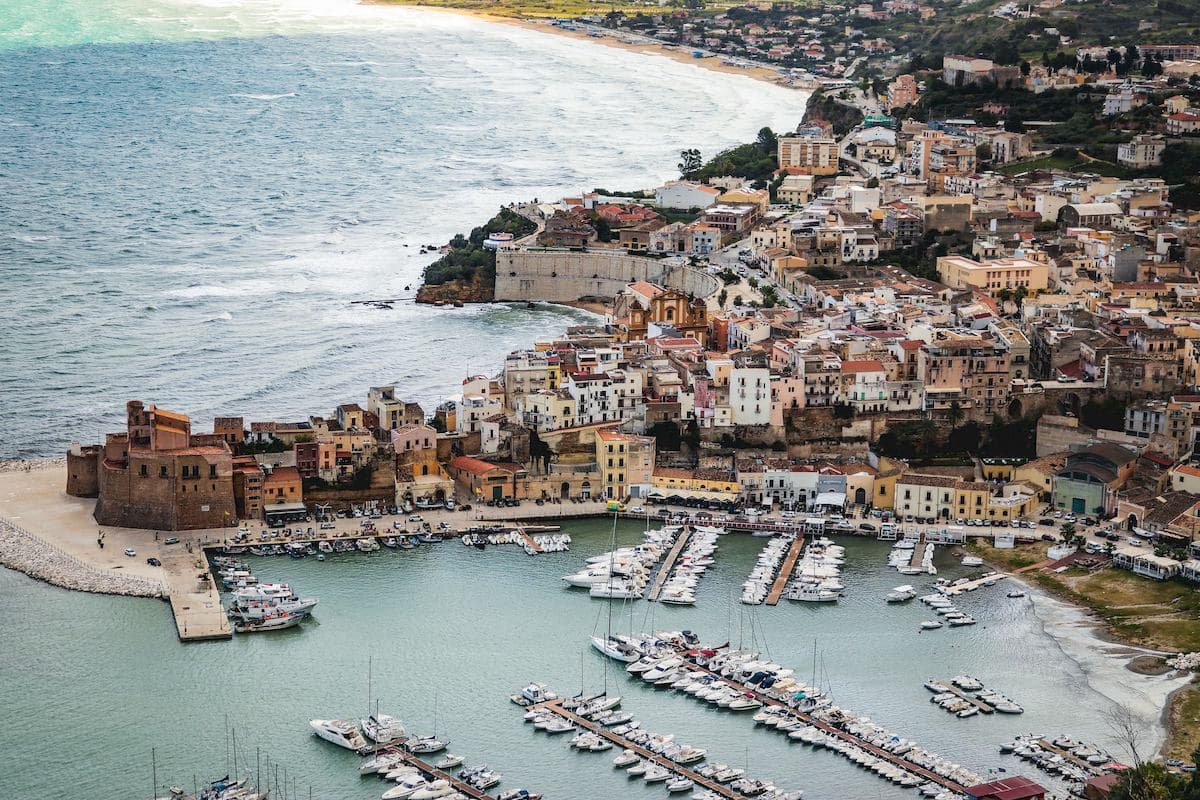
Tropea is really three places stacked together: the old town up on the cliff, the beaches and modern edge down below it, and the quieter coast spread out around it. Where you land depends on how much you’ll trade convenience for either the view or the space.
Up on the cliff — the old town
Centro Storico (the old town)
most desirableThis is the Tropea of the postcards, a compact maze of cobbled lanes and honey-stone buildings perched right at the cliff edge. The spine is the Corso Vittorio Emanuele, lined with cafes and shops, opening onto belvedere terraces where the whole coast drops away beneath you and Santa Maria dell’Isola sits out on its rock. Living here means the beauty is literally outside your door, the passeggiata, the piazzas, the sunsets, but it also means summer crowds pressing through the lanes, no car access to your door, and the famous steep climb between the town and the beaches below. It’s a place of pure atmosphere, best for someone who wants the Corso outside the door and will happily trade parking and quiet for it.
Best for: those who want the dream address and the daily theatre of the old town, crowds and stairs included
Learn more
Tropea’s old town has clung to this cliff since the Middle Ages, a strategic perch above the Tyrrhenian with a cathedral (the Norman-founded Cattedrale di Maria Santissima di Romania) that has survived earthquakes and carries a Black Madonna the town credits with its protection. The Affaccio del Corso and the belvederes were built to look out over the water toward Santa Maria dell’Isola, the little clifftop sanctuary that has become the symbol of the whole coast. Wander off the Corso and the crowds thin fast into quiet residential lanes, laundry lines, a nonna on a doorstep, the real town behind the postcard.
Down below — the beaches and the modern edge
The Marina / lower town (below the cliff)
beach convenienceDirectly beneath the old town lies the shore Tropea is famous for, wide beaches of pale sand and that unreal turquoise water, with the most celebrated stretch sitting right under the cliffs. The lower and newer parts of town spread back from here, flatter, more workaday, with easier road access and parking than the old town above. The trade is the obvious one, you get the beach on your doorstep and the car near your door, but you give up the drama and charm of the historic core, and in high summer this is where the crowds pour in and out. It’s the practical side of Tropea.
Best for: beach-first livers and anyone who wants level ground, easier parking, and the sand a short walk away rather than a long stair-climb down
The coast around — quieter, and you’ll need a car
Parghelia
quiet neighbourJust up the coast, Parghelia is Tropea’s calmer next-door neighbour, its own small town with lovely beaches (Michelino among them) and a fraction of the crowds. You get much of the same coastline and light with a quieter, more residential feel, and generally more house for your money. The trade is that you’re a short drive from Tropea’s shops, restaurants and station, so a car moves from useful to essential.
Best for: those who want Tropea’s coast and calm without its summer crush, and don’t mind driving in for the buzz
Capo Vaticano
scenic & spread outThe dramatic headland south of Tropea, Capo Vaticano is a scatter of villages, hotels and villas above some of the most spectacular beaches in Italy (Grotticelle, Tonicello). It’s greener, more spread out, and prized for views and seclusion rather than town life. The catch is the isolation, you’re properly car-dependent here, services are thin, and outside summer it can feel very quiet, so it suits a certain kind of person and no other.
Best for: view-seekers and villa-dreamers who want space, nature and privacy over walkable town life, and will build their days around a car
Santa Domenica di Ricadi & the Ricadi villages
lower-key & cheaperInland and across the Capo Vaticano promontory sit the villages of the Ricadi comune, Santa Domenica, Brivadi, and others, more ordinary, more residential, and cheaper than the coast’s marquee spots. This is where you find the everyday Calabria behind the resort front: farmland, local life, less polish. The trade is that you’re trading the sea view and the tourist sheen for value and quiet, and you’re firmly in car country.
Best for: budget-minded settlers who want real local life and lower prices, and treat the famous beaches as a short drive rather than a doorstep