Venice · Go deeper
Getting around
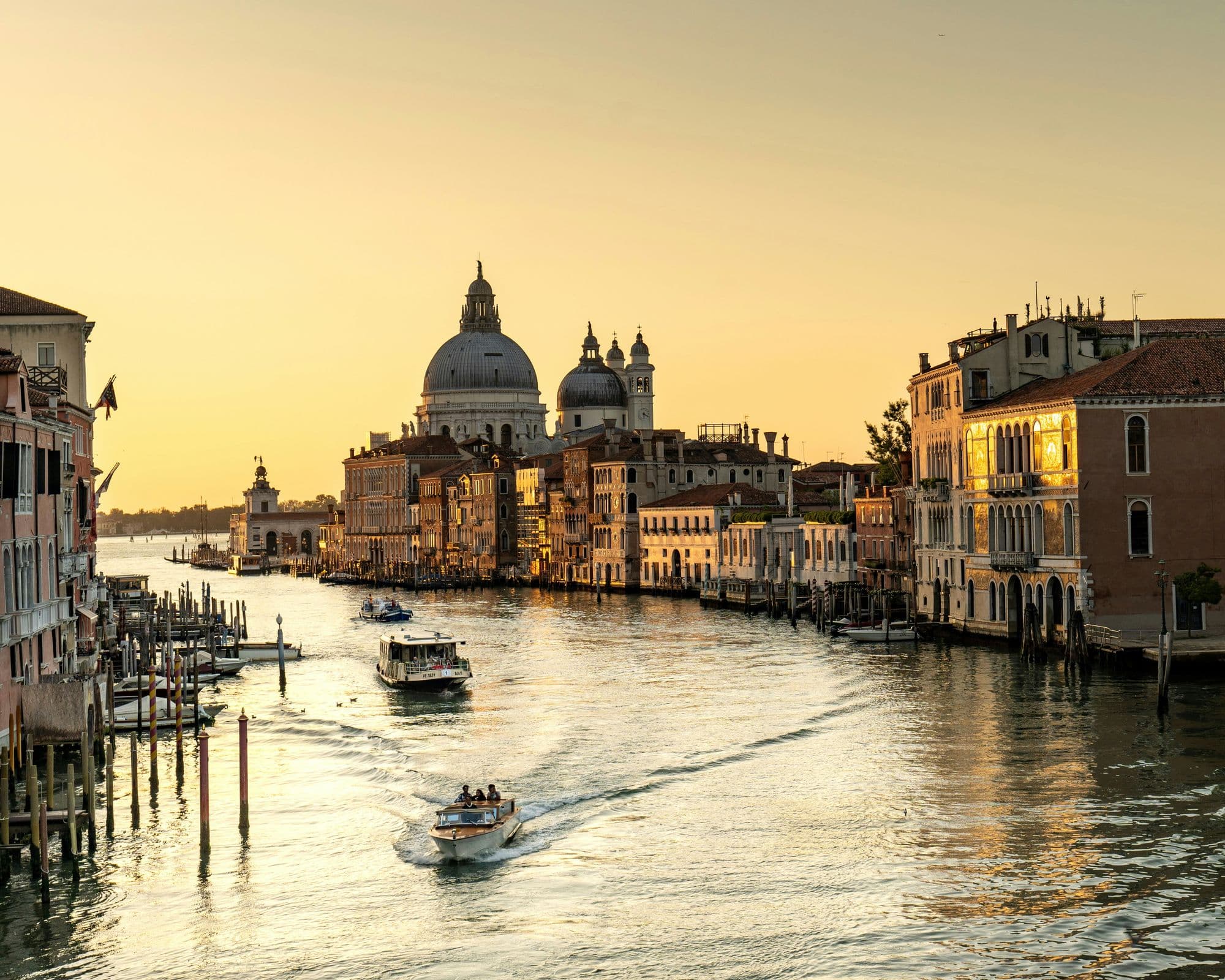
Getting around Venice is unlike anywhere else on earth, and it is the single biggest adjustment of living here. In the historic city there are no cars, no buses, no bikes, nothing on wheels at all. You move on foot over hundreds of bridges, or by boat. It is beautiful, and it is demanding. Here is the reality, including the one part of the Venice area where you can keep a car.
Getting there
By air, the long leg
Few long-haul flights land at Venice itself, so you’ll usually fly the intercontinental leg into a major European hub (Rome, Milan, Frankfurt, Paris), then take a short hop on to Venice Marco Polo (VCE). A few direct intercontinental routes reach VCE in season.
From Marco Polo into the city
The Alilaguna water bus (about €15, slow), a private water taxi (fast, ~€120+), or a land bus to Piazzale Roma. Treviso (TSF), about 40 minutes out, serves budget European carriers.
By train
Once you’re in Italy or Europe, fast trains run right into Venezia Santa Lucia, on the Grand Canal. Coming from elsewhere in Italy, it’s the best way to arrive. You step out onto the water.
By car
Cars stop at the edge. You drive to Piazzale Roma or the Tronchetto car park and leave the car there. No roads in the historic city, full stop.
Intercity bus
FlixBus and Itabus coaches reach Venice at Tronchetto and Mestre, cheaper than the train but slower and less central; here the train usually wins.
Around the city
On foot, over the bridges
Walking is the primary way to get around Venice proper, and you will do a lot of it, over canals, up and down the steps of hundreds of bridges. There is no avoiding it. Wonderful for a while, tiring with heavy shopping, luggage, or mobility issues.
The vaporetto (water bus)
The public transport of Venice, operated by ACTV, a network of water buses running the Grand Canal and out to the islands. Essential and scenic, but expensive for visitors and slower than you expect. Residents buy a discounted travel pass, which makes it far more affordable than the single fares tourists pay.
No cars in the historic city
There are no cars anywhere in Venice proper. Vehicles stop at Piazzale Roma at the city's edge, where there is parking and the people-mover. Everything you own arrives on foot or by boat. This is the defining fact of daily life here.
The exception: the Lido and the mainland
If you want a car, the Lido allows them, and Mestre on the mainland is a normal city with normal roads and parking. This is a major reason many residents choose the Lido or the mainland over the historic islands.
Train connections — from Venezia Santa Lucia
Venice’s station sits right on the Grand Canal, with high-speed links across Italy. Rough fastest times:
Padua
about 25 min
Verona
about 1h 10m
Bologna
about 1h 30m
Milan
about 2h 15m
Florence
about 2h
Rome
about 3h 45m
Times vary by service and season. Check live train schedules on Trenitalia › and vaporetto routes and timetables on ACTV ›